

Brass Shelf for the Bathroom: Function, Material, and Patina in Practice
A brass shelf in the bathroom gathers shampoo, soap, and small utensils into a calm, curated display; it replaces the visual clutter of plastic and wire shelves and extends product life by providing a dry, flat surface. However, the choice of shelf is not just about aesthetics. In a wet room, the chemistry of the material dictates daily life: water, soaps, lime, and cleaning agents will reveal the difference between a solution that ages gracefully and one that quickly loses its finish.
Function and Placement in the Bathroom
Start with the zones. A brass shelf works best where water doesn't constantly hit it—by the sink, over the bathtub, or in a niche without a direct shower spray. Here, unlacquered brass can set a calm, warm tone, while bottles stand stably and visibly. In the shower zone itself, stainless steel is often the most robust choice, especially if chlorine-based cleaning products are used or if the residence is coastal.
In terms of design, the shelf should have:
- a defined drip edge or a slight backward slope so water doesn't collect
- open corners without narrow crevices
- wall brackets with hidden screws that allow for re-tightening
This reduces stagnant water and simplifies cleaning, which ultimately means fewer stains and less maintenance.
Materials That Withstand Water: Brass and Stainless Steel Side by Side
Brass provides warmth, depth, and patina. Unlacquered brass will slowly darken and, in humid environments, develop deeper brown and greenish hues; many designers specifically seek this look. BastantDesign describes how a brushed brass shelf in the bathroom develops a natural patina that adds character over time when exposed to moisture and touch (source: BastantDesign). If lacquered brass is chosen, the factory look is maintained for a period, but the lacquer is a consumable part that requires careful cleaning and may need to be renewed.
Stainless steel is chemically optimized for wet rooms via its chromium-rich passive film, which resists surface corrosion and requires minimal care. WorldStainless/Euro Inox highlights that 1.4301/304 is suitable for typical indoor bathrooms, while 1.4401/316 (or 316L) is recommended in environments with chlorides, sea spray, or frequent use of heavily chlorinated cleaning agents (source: WorldStainless/Euro Inox). Surface finish also matters: a fine satin finish or an electropolished finish reduces the risk of pitting corrosion because micro-roughness and particle retention are lower. Geometry and weld quality are crucial; avoid designs that trap water, and prioritize fully welded joints that can be uniformly post-processed.
In short:
- 304/1.4301 works in most indoor residences
- 316/1.4401 or 316L is wise in coastal air, near pools, or with frequent use of strong chlorine-based cleaning agents
- Choose fine sanding or electropolishing and thoughtful drainage in the design
This combination—brass in dry zones and stainless steel in wet ones—provides both warmth and durability.
First Look: Skagen Wall Shelf in Steel
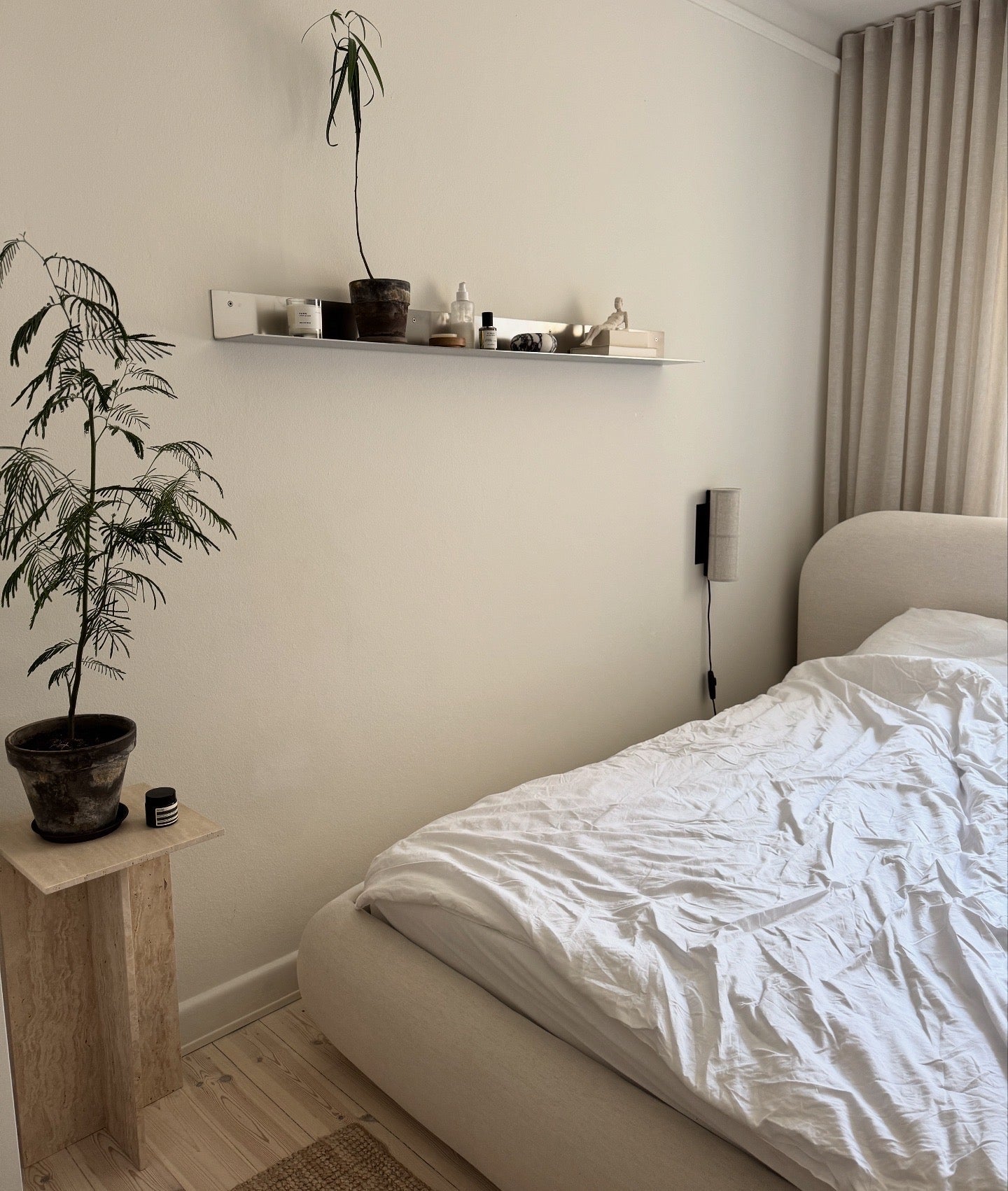
Skagen is Acier Studio's wall-mounted shelf in solid stainless steel, manufactured in small series in Aarhus. The profile is folded in one piece for rigidity without visible joints on the front edge, and mounting is done with hidden brackets, so the shelf reads as a clean, graphic line on the wall. A uniform, fine grain direction runs along the entire length, making scratches easier to maintain and providing a calm play of light.
The image below shows Skagen mounted in a bedroom above the bed, styled with skincare, a small plant, candles, and a sculptural figure. The context—a rounded upholstered linen headboard, white textiles, linen curtains, a large palm, and a stone table—shows how a slender steel shelf can integrate into soft, light interiors without appearing technical. The same discipline in profile, surface, and invisible mounting makes Skagen ideal for the bathroom's dry zones; in the shower niche, we recommend matching material choices and cleaning routines with the house's water quality.
See more details about Skagen on Acier Studio's product page: Skagen steel shelf.
Danish Craftsmanship in Aarhus
Acier Studio's shelves are manufactured in Denmark in small series with local quality control, material traceability, and hand-grinding that removes sharp edges and provides even grain direction. This approach builds on the Danish furniture tradition, where precision in finish and material integrity are highly valued—a focus that Dansk Møbelkunst describes in their review of master craftsmanship (source: Dansk Møbelkunst). For the user, this means heavier material thicknesses, rigid profiles, stable suspensions, and surfaces that can be refurbished instead of discarded.
Maintenance and Patina Over Time
Unlacquered brass:
Clean with lukewarm water and pH-neutral soap. Wipe dry with a soft microfiber to avoid limescale rings; consciously leave some variation if you desire deeper patina. Remove soap residue early, as fatty acids can cause uneven dulling. If a warmer tone is desired faster, a mild wax can be applied sparingly. Avoid bleaches, chlorine, and acidic descalers—they can etch the copper and zinc components. Drummonds describes similar routines for unlacquered brass surfaces and points out that too much polishing removes the natural layer that protects over time (source: Drummonds).
Lacquered brass:
Dust with a dry, soft cloth and use only mild, diluted soap when needed. No abrasive cleaners. When the lacquer becomes dull or micro-damaged, moisture and soap can creep in; at that point, the lacquer should be gently removed and renewed to maintain a uniform appearance.
Stainless steel:
Rinse after contact with chlorides (salt, chlorine-containing agents), and dry the surface, especially at edges and around fittings. Use microfiber in the direction of the grain and mild dish soap. Avoid steel wool and harsh scouring pads that can leave particles and scratches, which may later become discolored. In hard water areas, it's worth wiping down after showering to prevent limescale from binding soap and dirt to the surface. Euro Inox emphasizes that designs without water traps and with fine surfaces significantly reduce maintenance (source: WorldStainless/Euro Inox).
Long-term Perspective
A brass shelf in the bathroom can serve as a calm, tactile anchor point that ages with the room. Combined with stainless steel in the wet zones, a robust solution is achieved that minimizes resource waste and replacements. Craftsmanship in solid materials can be sanded, cleaned, and adjusted, while thin, surface-treated steel and plastic often get discarded at the first signs of damage. Over the years, thoughtful material choices, correct placement, and honest maintenance lead to a more stable daily life, a more defined expression—and fewer compromises.

