

Mug shelf in the kitchen: hygiene and durability with brushed stainless steel
A mug shelf in the kitchen is in constant contact with water, coffee, and tea. Porous materials absorb moisture and become discolored, increasing maintenance needs and hygienic risks over time. A mug shelf made of brushed stainless steel solves both problems at once; the surface is dense, chemically stable, and easy to clean without losing its appearance.
Why ceramic and wood stain and retain moisture
Ceramic shelves and tiles are classified by water absorption in standards such as ISO 10545-3. Semi- or non-vitreous ceramic bodies, especially when unglazed or having micro-crazing in the glaze, have open pores. They absorb water, coffee, and tea, and dyes from tannins bind within the pore network. The surface can be impregnated, but the treatment degrades mechanically and chemically with daily use, so stains slowly set deeper.
Wood is hygroscopic. It exchanges moisture with the air and with liquid on the surface, swells and moves with seasonal variations, and absorbs dyes if the lacquer or oil is compromised. Repeated wet-dry cycles from drips and cups also increase the risk of dark marks around cup bases and along edges where water pools.
The result is not just visible stains. Moisture in pores and open fibers provides a long residence time for organic material, making effective disinfection more difficult.
What brushed stainless steel does differently
Brushed stainless steel is non-porous. It protects itself with a very thin, chromium-rich passive oxide film, which renews itself with oxygen from the air. Correct alloy and surface finish ensure that liquids and food do not penetrate the material, and that routine washing remains effective year after year. According to Outokumpu, a directionally brushed No.4 finish describes a uniform, silk-matt structure with a typical roughness Ra of about 0.1–0.4 µm, which reduces microscopic traps for dirt and simplifies refreshing after repair (see Outokumpu's surface guide).
The directionally brushed grain camouflages daily touches and small wear marks, unlike mirror-polished or cross-brushed surfaces. The surface can be restored locally with the correct tools, so the shelf maintains its visual calm without deep grinding damage.
Skagen mug shelf in use
Acier Studio's Skagen is a wall-mounted shelf made of brushed stainless steel, developed specifically for the moist and colorful environment around the kitchen sink. Its shape is flat and precise with carefully deburred edges, preventing sharp burrs or pockets where water can collect. The directionally brushed structure provides a consistent look, even when multiple shelves are placed in continuation of each other, because the grain direction visually continues.
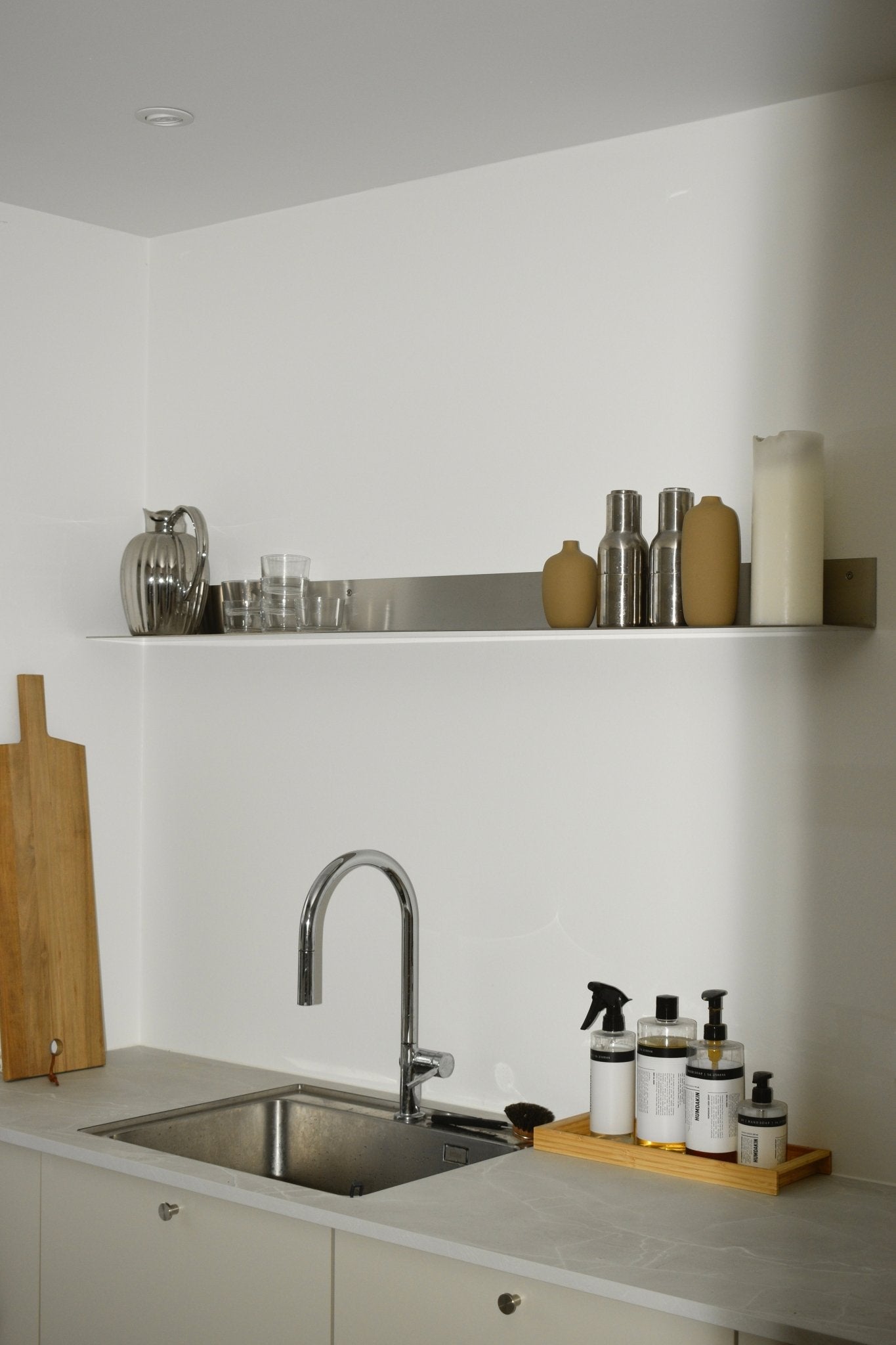
In the picture, Skagen is seen above a sink, styled with steel and ceramics: a silver jug, glasses, oil and vinegar bottles, ochre vases, and a candle. The cool, matte surface interacts with the chrome faucet and the wooden mug holder on the cutting board, without drawing focus. This is precisely the point in a working kitchen; the shelf is a tool, not a fragile surface, and it can withstand contact with wet cups and glasses without staining.
See Skagen in more detail here: Acier Skagen shelf
Danish manufacturing in small batches
Skagen is manufactured in Aarhus in small batches. Small-scale production ensures tight tolerances and consistent grain direction from component to component because the same craftsman series-grinds, adjusts, and inspects each shelf. The welding and grinding work remains visible in the quality, not as decoration, but as the absence of distortions, shadows, and uneven surface texture. This is the kind of material honesty Danish metal craftsmanship is known for, providing reparability and traceability in the finish.
Read more about workshop processes and material logic here.
Placement and interaction in a Scandinavian kitchen
A brushed steel mug shelf appears light and modern when combined with warm wood types and vitrified porcelain cups. The surface provides hygiene and contrast, while the directionally brushed structure minimizes small scratches. Consider placement relative to water sources; allow a distance from the faucet to the front edge of the shelf so that drips do not leave marks on the wall. Use backsplashes of glaze-sealed tiles or fully sealed wood where water can accumulate, making overall maintenance simple and predictable.
Maintenance, honest and specific
- Wipe daily with lukewarm water and mild dish soap, working lightly in the direction of the grain with microfiber. Rinse and dry to prevent limescale buildup.
- Remove tea and coffee rings with a solution of warm water and a little baking soda, rinse and dry.
- For stubborn marks, a fine, non-abrasive non-woven pad can be used lightly in the direction of the grain with water as a lubricant; avoid steel wool and cross-sanding.
- Avoid chlorine-based bleaches and strong hydrochloric acid or ammonia-based cleaners near the steel; rinse immediately if contact occurs.
- Limescale can be dissolved with a weak citric acid solution, rinse thoroughly and dry afterward.
A directionally brushed No.4 surface can be refreshed locally if damage occurs. Always work in the direction of the grain and test on an inconspicuous area first.
Long-term value
The choice of brushed stainless steel for a mug shelf in the kitchen is about risk management over time. The material does not absorb moisture or tannin, it withstands frequent cleaning without requiring surface treatment, and the finish can be repaired without replacing the entire unit. Moreover, when the shelf is manufactured in Aarhus with controlled grain direction and uniform edges, you get a part of the kitchen that patinates gracefully and works with the space, not against it. This is the type of lasting function and material clarity that pays off over years, both aesthetically and practically.

